
Best Lock Lube
Best Lock Lube
Got a sticky lock? Your first instinct might be to grab a can of WD-40. It fixes everything, right? When it comes to the delicate moving parts inside a lock, however, you might be doing more harm than good. That quick fix can lead to a bigger problem down the road.
The issue is that common products like WD-40 and 3-in-1 oil are “wet lubricants.” Ask any locksmith, and they’ll tell you using an oily spray in a keyhole is like putting honey on a dusty shelf—it just creates a sticky mess. Their oily nature acts as a powerful “dirt magnet,” attracting dust, grime, and tiny metal shavings that build into a thick sludge over time.
While that initial spray feels like a success, it’s temporary. In practice, that wet film has just started a cycle that makes the lock even worse a few months later. So, what can you use to lubricate a keyhole correctly? The secret is finding a lubricant that won’t attract gunk.
The Locksmith’s Secret: Why Dry Lube is Your Lock’s Best Friend
If oily lubricants turn your lock into a dirt magnet, what’s the alternative? Professionals recommend a dry lube for locks. The name says it all: it’s a lubricant that doesn’t stay wet or sticky. Instead of creating a new problem by attracting grime, it provides a clean, slick solution that actually lasts.
These products work in a clever way. They are applied as a liquid, but this liquid is just a temporary carrier that evaporates almost instantly. What’s left behind is a microscopic, non-sticky film—think of it like the surface of a non-stick pan for your lock’s internal parts. This ultra-slick coating is a fantastic non-attracting dust lock lubricant.
Because the surface stays dry, future dust and grime have nothing to cling to. This not only fixes the immediate stickiness but prevents the gunk from building up again, making it the best lock lube for long-term health and reliability. With this in mind, the only question is which type of dry lube is right for your specific lock.
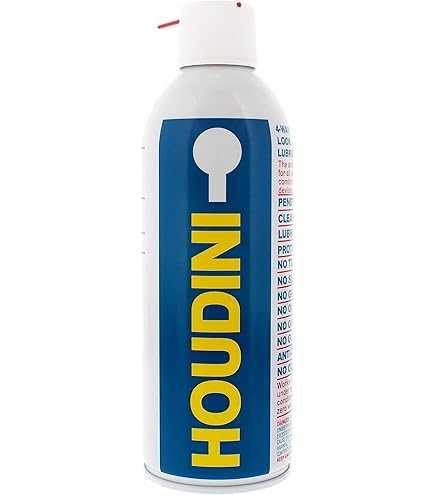
Houdini Lube
Houdini Lock Lube is the #1 Spray Lock Lube in the Locksmith industry for over 30 Years. Use the cleaning lubricant professionals use! Lock lubrication that penetrates tight spaces for effective lube protection. Houdini Lock Lube brings back the smooth operation, free of sticking and key jamming that can plague locks.

Graphite vs. PTFE/Silicone Spray: Which Is the Best Lube for Your Lock?
When choosing a dry lube, you’ll typically find two excellent options on the shelf: traditional graphite and modern sprays. Graphite is the classic choice—a super-fine, very slippery black powder that has been used for generations. It works exceptionally well at reducing friction, but its main drawback is the potential for mess. If you’re not careful, the fine powder can easily puff onto your hands, key, or door.
For a cleaner, more versatile solution, look for a modern Teflon-based lock spray (often labeled with PTFE or silicone). Think of PTFE as the same material that makes a non-stick pan slick. These sprays go on with a liquid carrier that evaporates almost instantly, leaving behind an invisible, durable, and slick film. This makes a PTFE or silicone spray for home locks a fantastic, mess-free alternative that won’t stain surfaces.
So, in the debate of graphite powder vs silicone spray for locks, the best choice depends on the job. A PTFE spray is the superior all-rounder, especially for your home’s front door, car doors, or outdoor padlocks, as it also helps resist moisture and freezing. Graphite remains a great, low-cost option, but it’s best suited for indoor locks where you can easily manage any potential mess. With the right product now chosen, you’re ready to apply it.
How to Lubricate Any Lock in Under 60 Seconds
You’ve got the right product—now for the easy part. Proper door lock maintenance takes less than a minute, and when it comes to lubricant, a “less is more” approach is always best. You don’t need to flood the mechanism; a quick, targeted application is all it takes to fix a sticky key. Whether you’re learning how to apply graphite lock lubricant or using a modern spray, the process is virtually identical.
Simply follow these three quick steps for how to lubricate a sticky lock:
- Aim the nozzle or tube directly into the keyhole.
- Apply a short, one-second spray or a single puff of powder. A little truly goes a long way.
- Work it in by inserting your key all the way, then sliding it in and out several times. Turn the key back and forth to ensure the lubricant coats all the internal moving parts.
Your Quick-Reference Guide for Specific Lock Problems
Different locks face different challenges, but choosing the right product is simple once you know what to look for. When winter strikes, the best lubricant for frozen car locks is a specialized de-icer spray. These products contain an ingredient to melt the ice and a small amount of lubricant to get the parts moving again, solving two problems at once.
For an outdoor lock exposed to the elements, you might be dealing with more than just grime. The key to lubricating a rusty padlock is a two-step process: first, use a penetrating oil to break down the rust and clean the mechanism thoroughly. Once you wipe it clean, then apply a long-lasting, water-resistant dry lube like a PTFE spray to protect it.
And for the most-used lock in your home? The best lubricant for a deadbolt is a PTFE-based dry spray. It goes on clean, won’t attract dust from daily use, and provides a durable, slick coating that ensures your key glides in smoothly every time. Applying the right product is the first step in proper lock care.
The 5-Minute Fix to Keep Your Locks Working Smoothly for Years
That frustrating jiggle of a sticky key no longer has to be part of your day. You now understand the real problem isn’t dryness, but the gunk that builds up inside. Armed with the knowledge of the best lock lube—a dry, non-sticky formula—you can solve the issue for good, not just create a mess that will cause bigger problems down the road.
To keep that smooth-as-new feeling, turn this fix into a routine. A quick spray in the spring and another in the fall is all your lock maintenance schedule needs. This simple step in your door lock maintenance guide prevents buildup and keeps your locks working flawlessly year-round, ensuring you’re never left stuck in the cold.
You now see your lock not as a mystery, but as a simple mechanism you can easily maintain. This small habit is powerful. You’re trading a few seconds and a $10 can of the right stuff to save yourself the stress of being locked out and a future $100+ locksmith bill.






Leave a Reply
Want to join the discussion?Feel free to contribute!