
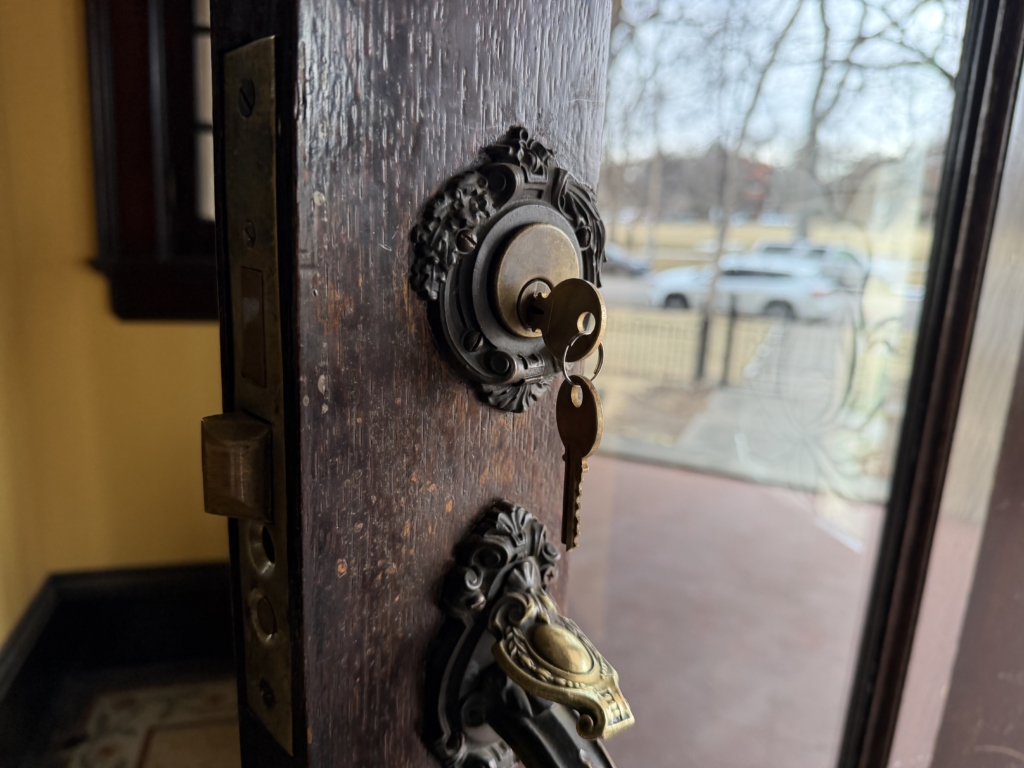
Preserving History: Antique Lock Maintenance Tips
Preserving History: Antique Lock Maintenance Tips
You’ve just found a beautiful antique chest, but the key won’t turn. Your first instinct might be to reach for that can of WD-40, but stop. For vintage locks, industry professionals know that common spray lubricants are often the worst choice. The culprit is often simply decades of dust, not a broken mechanism, and forcing it is the fastest way to cause permanent damage.
What to Do When a Key Feels Gritty or Stuck
Feeling a gritty resistance when turning an old skeleton key? Avoid grabbing a can of household oil spray. Wet lubricants are a magnet for dust and dirt, quickly turning into a gummy sludge inside the lock mechanism and worsening the problem. The correct and safe tool for DIY old lock lubrication is a dry lubricant like powdered graphite, available at any hardware store.
For most sticking issues, this simple three-step process is often all you need:
- First, blow a puff of compressed air into the keyhole to clear out any loose dust and debris.
- Next, aim the nozzle of a graphite puffer bottle into the keyhole and give it a small squeeze.
- Finally, gently insert and remove the key several times to distribute the powder, then try turning it slowly.
This works because many of these are simple warded locks—think of the inside as a small maze that the shape of the key is designed to navigate. The gritty feeling is just dirt clogging the path. The graphite powder acts like microscopic ball bearings, helping the key glide through the maze without attracting more grime. If the lock still feels sluggish after this, it’s a sign that old, sticky oil inside needs to be cleaned out.

Antique Lock Repair: Essential DIY Tips & Tricks
How to Safely Clean a Gummy Lock Mechanism
When dry lubricant isn’t enough, it’s a sign that years of old oil and grime have turned into a sticky sludge inside. Fortunately, most antique locks on furniture and trunks are surface-mounted, meaning the entire mechanism is in a metal case simply screwed onto the wood. Removing it is often as easy as backing out two or four screws, which gives you full access for a proper cleaning.
Once the lock is removed, you can safely dissolve that stubborn gunk. Place the lock in a small glass dish and cover it with mineral spirits, a gentle solvent that won’t harm the metal. Using an old toothbrush or a soft brass brush, gently scrub the visible moving parts. A steel brush is far too harsh and will leave permanent scratches, but the softer brass bristles are perfect for dislodging grime from delicate iron or brass components.
After a gentle scrub, let the lock air dry completely on a clean cloth. This process alone will restore function to most sluggish locks. However, if during cleaning you see any cracked metal pieces or bent parts, the problem requires more than a cleaning.

Antique Lock Repair: Essential DIY Tips & Tricks
When to Call an Antique Locksmith
You can now confidently diagnose simple issues and apply safe first aid. Your most valuable new skill, however, is knowing when to stop. Recognizing a problem that needs an expert isn’t failure—it’s the smartest move you can make to protect your treasure.
If you spot a red flag, your diagnostic work is done. It’s time to call a professional.
- You see any cracked or broken metal pieces.
- The key itself is bent, cracked, or broken off in the lock.
- The lock is completely seized even after a gentle cleaning.
Finding a specialist resolves the antique lock repair vs replacement dilemma. You’re no longer just fixing a mechanism; you are preserving original door hardware value and the story of your piece for years to come.






Leave a Reply
Want to join the discussion?Feel free to contribute!