
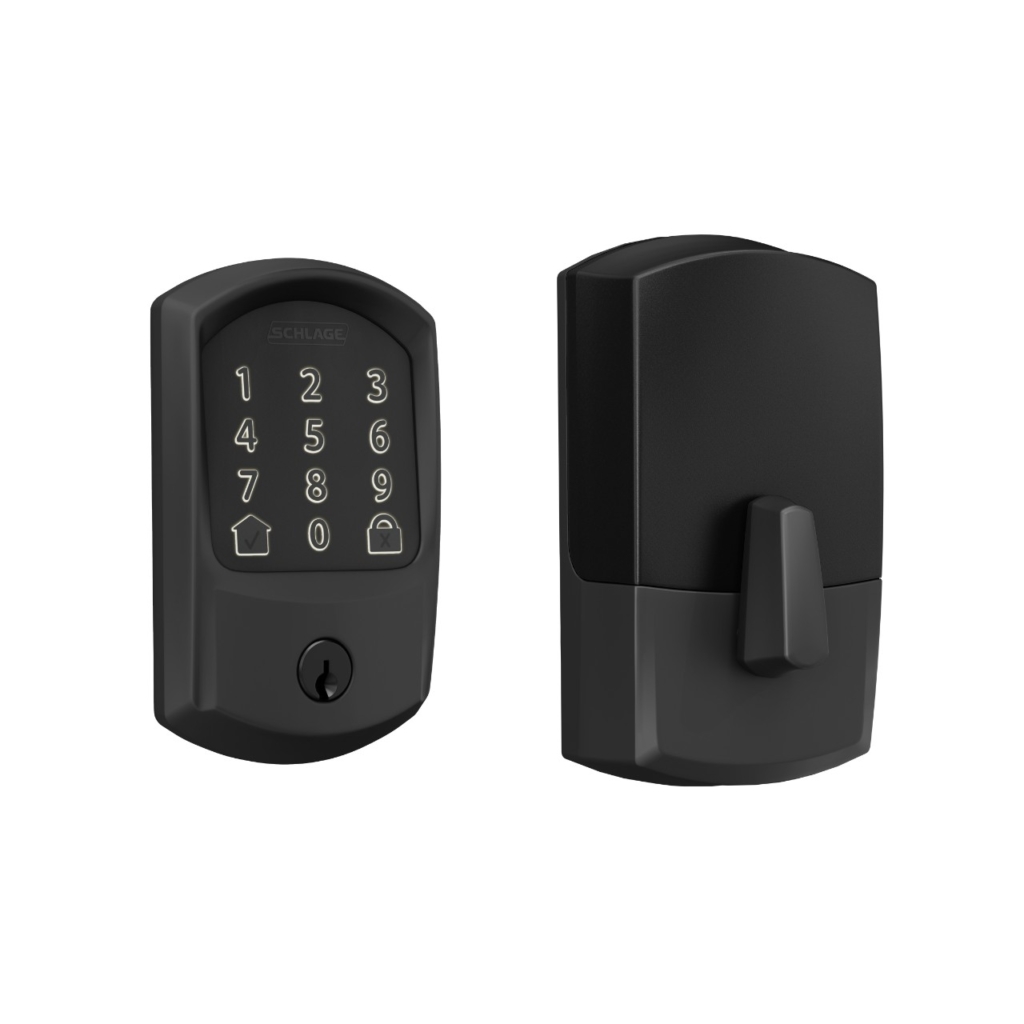
Deadbolt Lock
Deadbolt Lock
You lock your door every night, but have you ever considered how much security that little lock in the doorknob is providing? The truth is, that type of spring latch can often be bypassed in seconds. The single most important upgrade for your home’s security is a proper deadbolt door lock.
When you’re at the hardware store, the biggest decision you’ll face is the choice between a single-cylinder and a double-cylinder lock. A single-cylinder deadbolt is the one most of us know: it has a keyhole on the outside and a small knob, called a “thumbturn,” on the inside for quick locking and unlocking. A double-cylinder lock, however, requires a key on both sides.
So why would anyone want a keyhole on the inside? Imagine your door has a glass window nearby. Security experts note that a burglar could break that glass, reach in, and easily flip the thumbturn on a single-cylinder lock. In that specific scenario, a double-cylinder lock, which needs a key to be turned from the inside, provides much greater protection.
However, there’s a critical safety trade-off to consider. In an emergency like a fire, fumbling for a key to escape could be disastrous. For this reason, many local fire codes raise questions about whether double-cylinder locks are legal for residential exits. For solid doors without nearby glass, a single-cylinder lock almost always provides the best balance of security and safety.
What Does ‘ANSI Grade 1’ Mean? Decoding Lock Ratings
When you’re staring at a wall of deadbolts in the hardware store, it’s easy to wonder what makes one lock worth $40 and another worth $120. The answer is often found in a small but crucial detail on the packaging: the ANSI/BHMA security grade. This isn’t just marketing—it’s a standardized rating from the American National Standards Institute that tells you how much punishment a lock can take.
Think of these grades as a simple “Good, Better, Best” rating for security, based on rigorous testing for strength and durability.
-
Grade 3 (Good): This is the basic security standard for residential locks. It’s perfectly fine for an interior door, like a home office, but isn’t recommended for your primary entry points.
-
Grade 2 (Better): This is the sweet spot for most homes. A Grade 2 lock offers excellent security and durability, having been tested to withstand more force and last longer than a Grade 3.
-
Grade 1 (Best): This is the toughest, commercial-grade security you can get. A Grade 1 lock is tested to withstand the most serious attacks, making it the best front door lock for ultimate peace of mind.
For any exterior door, you should look for a lock that is at least a Grade 2. While a Grade 1 deadbolt provides the maximum protection, a Grade 2 offers a fantastic balance of security and value for your home. But remember, even the best lock is only as strong as the door and frame it’s attached to.
Two Simple Tricks to Make Any Deadbolt Drastically Stronger
A high-security rating is a great start, but true strength comes from the installation. First, look at the throw bolt—the solid steel bolt that extends from the lock. Make sure it’s at least one inch long. A shorter bolt might not reach deep enough into the wooden door frame to properly resist being kicked or pried open, making that extra inch critical for security.
Next, focus on where that bolt goes: into the metal strike plate on your door jamb (the door’s frame). Here’s the single most effective, low-cost security upgrade: replace the plate’s tiny, half-inch screws with 3-inch wood screws. This provides powerful reinforcement by anchoring the lock deep into the solid wall stud behind the frame, not just the weak trim. A kick that would have splintered the jamb will now meet serious resistance.
Ultimately, a deadbolt is only as strong as the frame it’s locked into. These two details—a long throw bolt and deeply anchored screws—are what turn a good lock into great security.
Schlage vs. Kwikset, and What ‘Keyed Alike’ Means for You
Walk down the lock aisle, and you’ll mainly see two names: Schlage and Kwikset. While both offer a range of security grades, think of Schlage as the slightly heavier, more traditional choice, often favored for its beefy construction. Kwikset, on the other hand, is known for affordability and clever user-friendly features. Your choice often comes down to balancing classic durability with modern convenience.
Tired of fumbling with different keys for your front door handle and deadbolt? That’s where a keyed alike lock system becomes a huge help. This simply means you can buy a set of locks that all operate with the same key. It’s a huge convenience you can often find right in the package, saving you from a bulging keychain and guesswork at the door.
But what if you lose a key or move into a new place? Traditionally, the only option was to pay a locksmith to rekey the existing hardware. To solve this, some Kwikset locks offer a “SmartKey” feature that lets you rekey the lock yourself in seconds. This is a game-changer for new homeowners or anyone who needs to change keys quickly without a professional.
Your 4-Point Checklist for Buying the Right Deadbolt
Just keep these four points in mind when you head to the hardware store:
Your Hardware Store Checklist
-
Cylinder Type: Single-cylinder for most doors, double-cylinder only if a window is right next to the lock.
-
Security Grade: Look for ANSI Grade 2 or 1 on the packaging for any entry door deadbolt.
-
Bolt Length: Make sure it has a 1-inch throw bolt.
-
Installation Upgrade: Grab a pack of 3-inch wood screws for the strike plate.
That small purchase isn’t just a piece of metal—it’s peace of mind you can hold in your hand.






Leave a Reply
Want to join the discussion?Feel free to contribute!