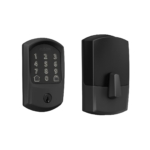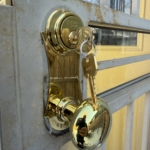
Deadbolt Lock
You hear the heavy clunk of the deadbolt lock sliding into place, and suddenly, the world feels a little safer. Yet, relying on the lock inside your doorknob provides only an illusion of security. These mechanisms use a “spring latch” with a beveled edge, which allows the door to close easily but leaves it vulnerable to “shimming”—sliding a stiff object like a credit card between the frame to push the latch back open.
True protection requires the unyielding strength of a dedicated door deadbolt. Unlike a privacy latch, this hardware lacks springs and remains locked until you physically rotate the cylinder with a key or thumbturn. Distinguishing between these mechanisms allows for the selection of residential entry security hardware that ensures your home remains truly secure.
Inside the Steel: How the Cylinder, Throw, and Strike Plate Create Your Barrier
Most interaction with your door happens at the cylinder, the circular metal component where you insert your key. While the exterior requires that specific key to align internal parts, the interior side usually relies on a simple thumbturn mechanism operation to allow for a quick exit during emergencies. This housing acts as the “brain” of the assembly, protecting the machinery that decides who is allowed to enter your home.
Inside that housing sits a series of small pins acting like a hidden puzzle. Your key’s unique jagged edge pushes these spring-loaded pins to specific heights, creating a straight “shear line” that allows the lock to rotate freely. High-quality models often include specific pick resistant cylinder features, such as mushroom-shaped pins that catch and bind if an intruder tries to manipulate the lock without using the correct key.
Once the key solves that puzzle, the physical barrier slides into place. This extendable metal bar, technically called the “throw,” bridges the gap between your door and the frame to lock them together into a single unit. Specifically look for a hardened steel throw bolt when shopping, as this dense material resists sawing attacks much better than standard brass components. This material choice naturally leads to the next critical decision: balancing fire safety against glass protection.
Single vs. Double Cylinder Deadbolts: Choosing Between Fire Safety and Glass Protection
Glass panels near your entryway create a specific vulnerability: an intruder could break the window, reach inside, and unlock the interior door deadbolt using the standard thumbturn. To counter this, some homeowners choose a double cylinder deadbolt, which eliminates the thumbturn and requires a deadbolt key on both the interior and exterior sides. While this effectively prevents “reach-through” break-ins, it introduces a dangerous complication during emergencies.
Requiring a key to exit your own home can be fatal during a smoke-filled fire scenario, which is why many local building codes strictly prohibit these locks on designated escape routes. Assess your specific entryway setup using these criteria:
- Glass Proximity: If glass is within arm’s reach (approx. 40 inches) of the lock, a single cylinder is vulnerable to reaching hands.
- Safety Priority: When weighing the single vs double cylinder deadbolt decision, prioritize single cylinders for main exits to ensure rapid, keyless escape.
- Compliance: Verify local fire codes, as double cylinders are often illegal on residential egress doors.
With the configuration selected, ensure the lock is tough enough to survive a sledgehammer.
Decoding ANSI Grades: Why You Should Swap Your ‘Commuter’ Lock for an ‘Armored Tank’
Standing in the hardware aisle, you will see countless boxes claiming to be “heavy duty,” but these marketing terms often mask weaker components. To separate reliable hardware from cheap imitations, look for the American National Standards Institute (ANSI) rating. Consider this grade a survival score for your lock, measuring “cycles” (longevity over years of use) and impact resistance (how much force it takes to kick the door in).
The Builders Hardware Manufacturers Association (BHMA) rigorously tests locks to assign these grades, categorizing them by pure physical endurance. While a basic lock works for a bathroom, your front entry requires commercial grade door hardware strength:
- Grade 1 (Best): The “Armored Tank.” Withstands 1 million cycles and 10 heavy sledgehammer blows. This is the gold standard for security.
- Grade 2 (Better): The “Heavy-Duty SUV.” Lasts 400,000 cycles and survives 5 strikes. Suitable for residential side doors.
- Grade 3 (Good): The “Commuter Car.” Rated for 200,000 cycles and 2 strikes. Best strictly for interior privacy.
Investing in ANSI Grade 1 security ratings guarantees your deadbolt won’t be the weak link during a break-in attempt. When searching for the best exterior door lock set with deadbolt, prioritize this rating over the finish color. Once you have confirmed the steel core is tough enough to hold the line, you can focus on matching the aesthetics to your home’s curb appeal.
The Perfect Pair: Selecting an Entry Door Knob and Deadbolt Set for Style and Security
Fumbling through a heavy keychain in the rain is a frustration you can easily avoid by purchasing a door lock combo. These pre-packaged sets are typically “keyed alike,” meaning a single key operates both the front door knob and deadbolt set, streamlining your daily access. Beyond convenience, buying these components together ensures the metal finishes match perfectly and the mechanical spacing fits standard door preparations without requiring you to drill new holes.
Shape matters just as much as security when selecting your handle. While round knobs are traditional, a lever handle offers superior accessibility; if your hands are full of groceries or you have limited grip strength, a lever allows you to unlatch the door with a simple downward push of an elbow. Whether you opt for a lever or a classic keyed entry door knob with deadbolt, even the highest-quality lock is useless if the wood frame around it is weak.
The 3-Inch Rule: Strengthening the Strike Plate to Prevent Kick-In Attacks
Even the most robust residential entry security hardware relies entirely on the strength of the wood holding it in place. Standard strike plates usually come with short, half-inch screws that only penetrate the decorative door jamb—the thin strip of wood framing the opening. Because this soft trim has no real structural support, a single forceful kick can easily splinter the wood and pop the door open, leaving your expensive deadbolt fully intact but completely bypassed.
Upgrading your security takes less than five minutes and costs pennies. By installing a reinforced strike plate using 3-inch hardened steel screws, you bypass the soft trim and anchor the lock directly into the solid 2×4 wall studs of your house’s frame. This simple swap increases resistance against kick-ins by securely bonding the door to the building’s structure. However, drive these screws in slowly; overtightening can pull the frame out of alignment, which is the most common reason homeowners ask, “why is my door bolt sticking?”
Your Home Security Blueprint: 3 Steps to a Lockdown-Ready Front Door
You no longer have to guess if your home is truly secure. Knowing the mechanics behind that satisfying “clunk” transforms a simple hardware purchase into proactive locksmith recommended home protection. Whether you are installing deadbolts on all exterior doors or upgrading a flimsy back entry, you now have the knowledge to make data-backed decisions.
Start your 5-minute security audit today:
- Verify your lock is ANSI Grade 1 or 2.
- Check for 3-inch screws in the strike plate.
- Ensure the deadbolt throw extends fully (1 inch).
If your hardware falls short, plan your upgrade or consider rekeying a home cylinder. Security isn’t about fear; it’s about the confidence that comes from proper reinforcement.