
How to Winterize Your Locks in Colorado
How to Winterize Your Locks in Colorado
Picture this: It’s dark, the wind is howling down from the Rockies, and you’re fumbling with your keys. You put the key in the door, but it won’t turn. It’s frozen solid. For anyone who has endured a Colorado winter, this is a miserable, frustrating experience.
Dealing with a frozen lock can feel like an emergency, and the wrong move can damage it for good. The best solution has two parts: an immediate fix to get you inside safely and a simple, long-term preventative step to ensure this problem never happens again.
Frozen Solid? What to Do Right Now to Unfreeze Your Lock
When you’re stuck in the freezing cold, your best tool is a commercial lock de-icer. These products use an alcohol-based formula to rapidly melt ice inside the locking mechanism without causing damage. A small bottle is an inexpensive and crucial addition to your winter car kit or entryway table.
If you don’t have de-icer, you can carefully transfer heat using your key. Hold the metal blade of your key with a thick glove or pliers and warm it for a few seconds with a lighter—just enough to get it warm, not red-hot. Gently insert the warm key and wiggle it. You may need to repeat this a few times. Crucially, never apply a direct flame to the lock itself, as this can damage internal components and your door’s finish.
One common “fix” you should absolutely avoid is pouring hot water on the lock. While it might work for a moment, the water will seep deep inside the mechanism. As Colorado temperatures drop, it will refreeze into a much larger block of ice, making the problem significantly worse.
Why Your Locks Really Freeze: The Hidden Culprit Inside
Unfreezing a lock is a temporary fix; the root cause is almost always moisture that has seeped deep inside the locking mechanism. This hidden moisture comes from rain, melting snow, and even spray from a car wash. More surprisingly, Colorado’s classic temperature swings from a sunny afternoon to a frigid night create condensation inside the lock.
When that trapped water freezes, it expands and acts like a glue, jamming the small, sensitive pins your key needs to align. To truly prevent a frozen lock, your goal isn’t just dealing with ice—it’s about stopping moisture from building up in the first place.
The 5-Minute Prevention Plan: Lubricating for a Freeze-Proof Winter
To fight internal moisture, you need a product that pushes water out and creates a slick, protective barrier. A “dry lubricant” is designed for this. Unlike common oil-based sprays, these specialized lubricants won’t attract dust, thicken in the cold, or gum up the delicate parts inside your lock, making them the professional’s choice for winterizing.
Your best options are either graphite powder or a silicone-based lock lubricant. Graphite is a classic dry powder that has been a locksmith’s go-to for decades. A modern alternative, silicone spray, dries into a clear, water-repellent film. Either choice works wonderfully.
Applying it takes less than a minute per lock. For graphite powder, aim the nozzle into the keyhole and give the tube a single, gentle puff. For a silicone spray, use the attached straw for a short, one-second burst. Immediately after, insert your key and work it back and forth a few times to spread the lubricant throughout the mechanism. This single step is your most powerful defense against a frozen lock.
The Lock-Wreckers: 3 “Fixes” That Cause Expensive Damage
When faced with a stuck lock, it’s tempting to grab the first thing you can think of. Unfortunately, the most common fixes are the most likely to cause permanent damage.
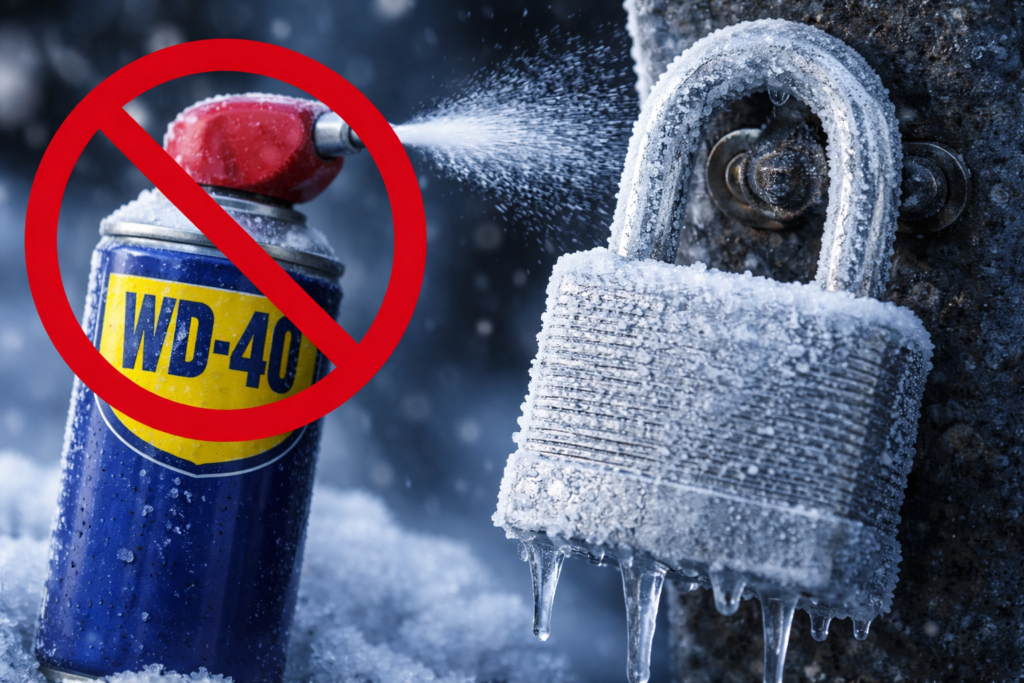
First, can you use WD-40 on frozen house locks? The answer is a firm no. While great for other tasks, it’s a solvent that strips away necessary lubricants and leaves a sticky residue that attracts dust and moisture, creating a gummy mess that will freeze even more solidly.
Second, avoid hot water. As mentioned, it provides a temporary thaw before refreezing into an even larger block of ice, turning a minor jam into a completely seized lock.
Finally, resist the urge to use brute force when your frozen key won’t turn in lock. Your key is made of softer metal than the lock’s frozen components. Forcing it is the fastest way to snap the key off inside the lock, instantly turning an inconvenience into an expensive emergency call to a locksmith.
Your Colorado Winter Lock Maintenance Checklist
That moment of dread—a key that won’t turn in the biting cold—no longer has to be an inevitable part of winter. With a few proactive steps, you can ensure your locks turn smoothly all season long.
- Emergency Kit: Keep a bottle of lock de-icer in your coat or bag (not inside the locked car or house!).
- Get Ready (Early Fall): Purchase a dry lock lubricant like graphite powder or silicone spray.
- Take Action: Before the first freeze, apply lubricant to all essential keyholes (home, car, padlocks).
- What to Avoid: NEVER use WD-40, cooking oil, or hot water on a frozen lock.
- If It Happens: Gently heat your KEY or use your de-icer. Do not force the key to turn.





Leave a Reply
Want to join the discussion?Feel free to contribute!