
Common Residential Locksmith Services Explained
Common Residential Locksmith Services Explained
Every homeowner dreads the click of the door shutting, followed by the sinking realization that their keys are on the other side. While a quick call to a locksmith is the right move, that emergency service is just a fraction of how a professional can secure your home. Their real value often lies in proactive solutions, not just reactive ones.
Think about the day you moved in. As you held those keys, did you ever wonder who else might have a copy—the previous owners, their contractors, a neighbor? Controlling who has access is the first step in upgrading home door security. This is where a residential locksmith transitions from an emergency contact to your most important partner in establishing a secure home from day one.
This guide demystifies the services that create true peace of mind. You’ll learn how simple choices, like rekeying instead of replacing locks, can save you significant money and stress. Whether you need an emergency residential locksmith in Denver, CO, or simply want to feel safer, you will finish this article knowing how to find a trustworthy professional and make confident decisions for your family.
Locked Out of Your House? Your First 3 Steps Before You Panic
If you’re locked out of your house, the key is to stay calm. Before considering drastic measures, take a deep breath and run through this quick mental checklist.
- Check every possible entry point. Is the back door unlocked? Did you leave a ground-floor window open? Sometimes the most obvious solution is the one we overlook in a moment of stress.
- Call for backup. Does a spouse, roommate, or trusted neighbor have a spare key they can bring over? A five-minute phone call can save you time and money.
- Search for a hidden spare. Did you hide an emergency key under a planter or in a lockbox years ago and forget about it?
If you’re still stuck, it’s time to look for an emergency home lockout service. A professional locksmith specializes in what’s called non-destructive entry. This means they use skill and specialized tools to get you back inside without damaging your lock or door.
Resist the urge to break a window or pry the door. The cost of replacing a pane of glass and repairing a damaged frame is almost always much higher than a standard service call. A reputable locksmith provides a faster, safer, and more cost-effective solution to get your day back on track.
New Home, New Keys: The Real Difference Between Rekeying and Replacing Your Locks
Congratulations on the new place! While unpacking, ask yourself, “Who else has keys to my home?” The previous owners, their contractors, their dog walker? To ensure you’re the only one with access, you have two main options for your door locks: rekeying them or replacing them entirely. Understanding the difference can save you significant money.
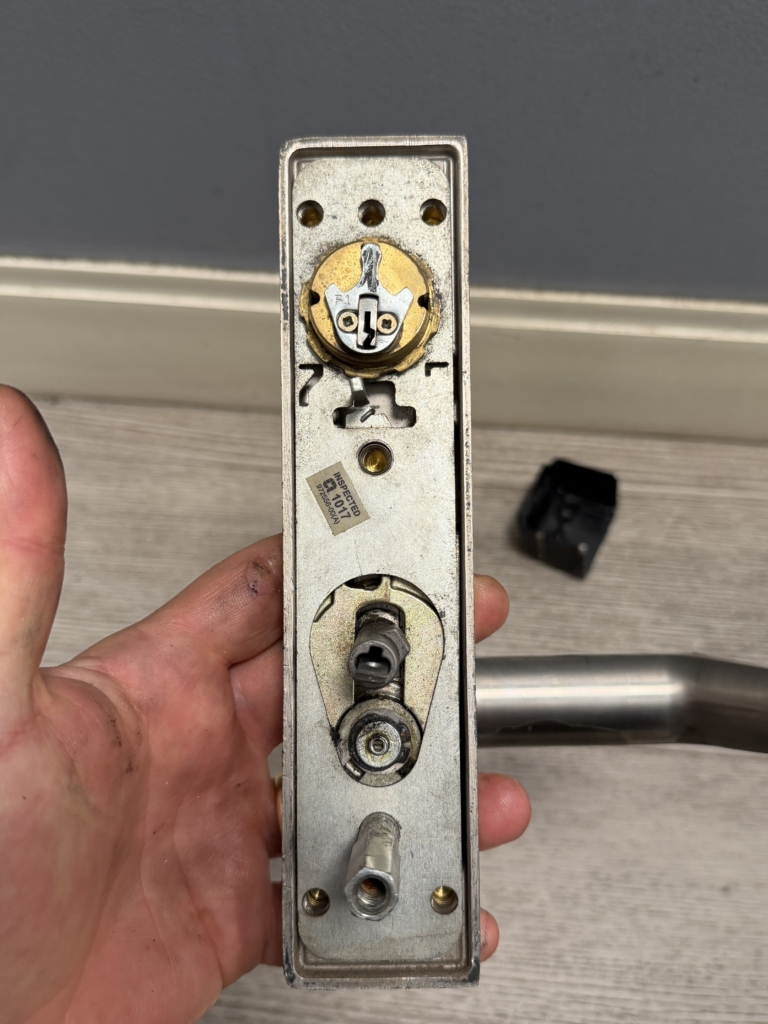
Think of rekeying as changing the password for your lock. A locksmith simply adjusts the tiny pins inside the existing lock cylinder so that it works with a brand-new key. Once this is done, any old keys become useless. This is a fast and affordable solution when your locks are in good working condition, giving you the security of new keys without the cost of new hardware.
On the other hand, replacing a lock means swapping out the entire mechanism for a new one. You should choose this path if your current locks are old, rusted, damaged, or you want to upgrade your home’s security. If a doorknob is wobbly or the deadbolt feels flimsy, a full replacement is the smarter, safer bet for your peace of mind.
The decision is usually straightforward: if your locks are in good shape, rekey them to control access. If they’re worn out or you’re ready for a security upgrade, replace them.

Rekey or replace locks
My Key Broke in the Lock! Can It Be Fixed Without a New Lock?
That awful snapping sound as a key breaks in the lock is a uniquely frustrating moment. If you have a broken key in your front door lock, your first thought might be that you’ll need a costly new deadbolt. Fortunately, in most cases, the lock itself is perfectly fine. A professional has the delicate tools needed to perform a broken key extraction, carefully removing the sheared-off piece without damaging the lock’s internal parts.
Before you reach for pliers or a paperclip, know that trying to fix it yourself can quickly turn a simple service call into a full lock replacement. The metal fragment can easily be pushed deeper or get wedged at an angle, making a clean extraction impossible. To avoid making the problem worse, here is what you absolutely should not do:
- Don’t try to force the other half of the key in to push the piece out.
- Don’t squirt superglue onto another object to try and “fish” the piece out.
- Don’t attempt to drill the lock yourself.
Calling a residential locksmith for an extraction is far less expensive than buying and installing new hardware. Once the piece is removed, they can assess if the lock is still in good shape. If your lock was already old or showing signs of wear, this incident could be the perfect opportunity to consider upgrading your security.
More Than a Doorknob: How to Choose a Truly Secure Front Door Lock
When you think about your door lock, you probably picture the knob you turn every day. While the locking doorknob offers some privacy, your home’s real defender is the deadbolt. A deadbolt is a solid, spring-free metal bolt that extends into the doorframe with a key or thumb-turn. Because it can’t be jimmied open with a credit card or simple force, a quality deadbolt is the most critical element in upgrading home door security. If you ever need a deadbolt lock repair or replacement, understanding what makes one effective is essential.
Not all deadbolts are created equal. Hardware manufacturers use a simple rating system, called an ANSI Grade, to measure a lock’s strength and durability. Think of it like a report card for security. Grade 3 is the most basic, suitable for an interior closet. Grade 2 is a solid choice for residential use, designed to withstand common attacks. For maximum protection on your front door, a Grade 1 deadbolt is the gold standard, tested to withstand a much higher level of force, making it a truly formidable barrier.
Beyond brute strength, a modern lock must also be smart. Burglars have techniques that bypass force altogether, like lock picking or “bumping,” which uses a special key to manipulate the lock’s internal pins. When learning how to choose a front door lock, look for models that specifically mention anti-pick or anti-bump features. These locks contain specialized security pins designed to frustrate and block such attempts, providing an essential layer of technical defense.
A strong door lock is your first and best line of defense. By choosing a high-grade deadbolt with modern security features, you make a powerful statement to any would-be intruder.
Are High-Security Locks Worth It? Gaining Real Peace of Mind
For those looking for the next level of protection, the answer lies in dedicated high-security locks for homes. While a quality deadbolt defends against common attacks, a high-security lock is engineered as a complete system to resist picking, bumping, and drilling. Built with hardened metals and complex, patented internal mechanisms, these locks are designed to frustrate even sophisticated attempts to bypass them, offering a formidable barrier that goes far beyond standard hardware. It’s the highest level of physical defense you can put on your door.
However, the most significant advantage of these systems is often a concept called “key control.” With a normal lock, anyone who borrows your key—a contractor, a dog walker, a previous tenant—can easily make a copy at any hardware store. High-security keys, on the other hand, are restricted. Only an authorized locksmith can create a duplicate, and they typically require your ID to do so. This feature gives you an ironclad guarantee that you know exactly how many keys to your home exist.
The choice comes down to your personal need for security. For most households, a professionally installed Grade 1 deadbolt is an excellent deterrent. But if you are highly concerned about break-ins or want absolute certainty about who has access, upgrading home door security with a high-security lock system is an investment that provides unparalleled peace of mind. A professional denver residential locksmith can help you evaluate if this solution fits your needs.
The Ultimate Convenience: Should You Get a Master Key System for Your Home?
Tired of fumbling through a heavy keychain to find the right key for the front door, back door, or garage? A residential master key system can bring this incredible convenience to your own home, allowing a single key to operate multiple different locks.
This setup offers more than just a lighter pocket; it provides customized access. For instance, your “master” key would open every lock, but a professional locksmith can also create a secondary key for a dog walker or contractor that only opens the front door and not your private office. This delivers one of the biggest benefits of a master key system for home: simplified access for you and controlled entry for others, reducing concerns about unauthorized key duplication for house keys.
Creating this hierarchy is a specialized service that a residential locksmith denver co can perform on your existing locks, as long as they are compatible. It’s an ideal combination of security and convenience.
Going Keyless: Why You Should Hire a Pro to Install Your New Smart Lock
For those ready to leave physical keys behind, smart locks offer incredible convenience and control. While it may seem like a simple DIY project, a professional smart lock installation service is one of the smartest investments you can make when upgrading home door security. The reason is simple: an electronic lock’s reliability depends entirely on its physical alignment, a detail that is easy to get wrong.
The biggest issue with a DIY installation is a slight misalignment between the lock’s deadbolt and the hole in the doorframe. If you have to push or pull on your door to get your current deadbolt to lock, a smart lock’s tiny motor will have to fight that resistance every time. This constant strain is the number one cause of rapid battery drain and mechanical jamming, which could leave you locked out.
Beyond just battery life, a poor fit compromises your security. A residential locksmith does more than just attach the lock; they ensure the door and frame are perfectly prepared. They can adjust the strike plate and drill precise holes so the bolt extends fully and fits snugly, maximizing its resistance against force. This ensures your high-tech lock isn’t defeated by a low-tech shove.
Finally, a professional can ensure you get the most out of your investment by helping you navigate the software setup, from programming user codes to enabling auto-lock features. Hiring a pro isn’t just about getting it done; it’s about getting it done right for lasting security and peace of mind.
How to Find a Trustworthy Locksmith and Avoid the Top 3 Scams
Unfortunately, the locksmith industry has a dark corner filled with scammers who prey on people in distress. When you’re locked out, it’s easy to make a rushed decision. Knowing the warning signs ahead of time is the best way to ensure you’re hiring a true professional. If you’re asking how to find a trustworthy locksmith for my home, focus on clear signals of legitimacy.
The most common scam is the “bait-and-switch.” Scammers advertise a suspiciously low service fee—often $15 to $40—to get the job. Once on-site, they’ll claim your lock is a special “high-security” model that requires drilling, inflating the final bill to hundreds of dollars. A professional will always be upfront about potential costs.
Instead of a generic online search, look for signs of a real, local business. A reputable residential locksmith in Denver, for example, will have a physical address—not just a P.O. Box. A legitimate locksmith shop in Denver you could visit is the strongest sign of trustworthiness.
Before you agree to service, run through this quick checklist. A trustworthy locksmith will:
- Answer the phone with a specific business name, not a generic phrase like “Locksmith Service.”
- Ask you questions about your situation to provide a realistic price estimate over the phone.
- Arrive in a clearly marked vehicle and often wear a company uniform.
- Provide a written invoice that matches the estimate before starting work.
Your Partner in Home Security: Putting Your Knowledge into Action
Before today, a locksmith might have only been on your mind during a lockout. Now, you see your home’s security through a new lens. You’re equipped to make informed choices, understanding the critical difference between rekeying a lock and upgrading your hardware, and you can confidently weigh the benefits of new security technology.
This knowledge transforms a residential locksmith from a reactive emergency service into a proactive security partner. A truly trustworthy locksmith is a key advisor in your long-term plan for a safe and secure home, not just the solution to a momentary crisis.
Here is your most powerful next step: Don’t wait for an emergency. Take five minutes today to research and save the contact information for a vetted, reputable residential locksmith in Denver, CO. That single action is your best tool, ensuring that a moment of future panic becomes a calm, confident call.





Leave a Reply
Want to join the discussion?Feel free to contribute!