
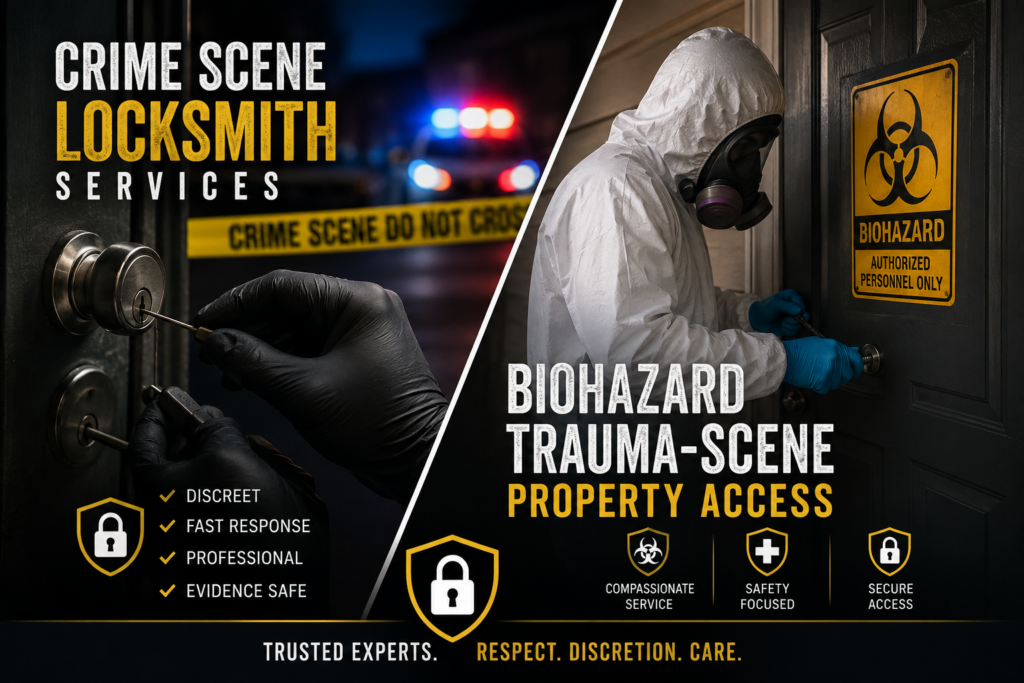
Crime scene locksmith services and biohazard trauma-scene property access
Crime scene locksmith services and biohazard trauma-scene property access
After emergency responders depart, property owners face a difficult question: how do you safely regain entry? Standard technicians lack the protective gear to handle invisible biological hazards lingering on door locks. According to modern scene security protocols, navigating trauma-scene property access requires a bio-certified professional. Rather than destructive forced entry, these specialists establish strict crime scene security, safely securing perimeters without risking dangerous cross-contamination.
Request Service Online
Enjoy 15% off when you reserve your service online
Why Biohazard Protocols and PPE Are Mandatory for Post-Incident Lock Services
After emergencies, property owners are often left with a locked, potentially contaminated door. Standard lock manipulation is bypassed in favor of authorized specialized entry to prevent spreading microscopic threats. Even if hardware looks clean, invisible pathogens survive easily on metal surfaces. To safely touch the device, specialists follow strict safety protocols for biohazard environments. This requires specific personal protective equipment for locksmiths at trauma sites, primarily double-layered nitrile gloves, disposable boot covers, and fitted respirators.
Preventing pathogen cross-contamination—accidentally tracking dangerous biological material off-site—is the next critical priority. To ensure complete safety before returning the property to the owner, every instrument used must undergo strict decontamination procedures. This chemical tool sterilization prevents the spread of invisible risks through a mandatory four-step process:
- Removing any surface residue using specialized, disposable bio-wipes.
- Applying hospital-grade chemical disinfectants directly to the equipment.
- Waiting the required surface contact time to ensure complete pathogen destruction.
- Sealing the treated tools securely in isolated bio-bags for safe transport.
Navigating Legal Authorization and Restoring Security After Emergency Entry
Figuring out exactly who is responsible for property access during a death investigation is often the first hurdle grieving families face. Professionals must follow strict legal requirements for locksmiths at crime scenes to protect everyone involved. Authorization mandates three specific documents: personal identification, proof of ownership or executor status, and a formal police release. These papers create a “chain of custody,” establishing a documented paper trail proving exactly who entered the property. This careful tracking ensures specialized locksmiths can open the device without destroying sensitive legal or insurance evidence.
After gaining clearance, the immediate priority becomes restoring security after forced entry by emergency services. First responders frequently bypass locks using destructive methods, leaving behind temporary wooden board-ups that keep the property vulnerable. Transitioning from these temporary barriers to permanent lock replacement requires installing fresh, uncontaminated hardware to completely reset the home’s access. Moving from a compromised doorway back to a safe, private environment takes careful coordination to establish permanent security.
Reclaiming Your Property for Permanent Security
When the time comes to safely reclaim your space, begin by coordinating your specialist locksmith to provide property access for biohazard restoration contractors. This ensures a seamless handoff between teams. Whether replacing locks after a violent crime or securing property after trauma scene cleanup, this professional perimeter finalizes your security reset. By trusting certified experts to manage these invisible risks, you confidently regain total control and peace of mind.





Leave a Reply
Want to join the discussion?Feel free to contribute!